Day 15 – January 9, 2026
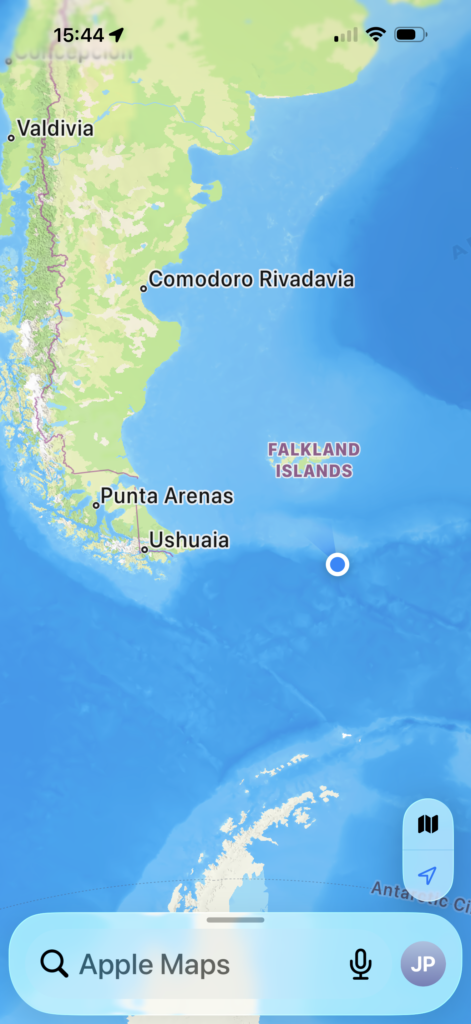
Drake Passage
(Day 13 on the ship)
Today was another day at sea, cruising north through the Drake Passage, and it turned out to be one of those unexpectedly fascinating behind-the-scenes days.
We had breakfast delivered to the room this morning since John had signed up for a ship tour along with Catherine. While they headed off, I enjoyed a slower morning before tackling my own projects.
The tour began on the bridge, which was incredibly interesting. The Seven Seas Splendor operates with two propellers, two bow thrusters, and one aft thruster, giving the ship impressive maneuverability—especially when docking or navigating tight or icy conditions. The ship also uses stabilizers that keep things remarkably steady, even in rough seas.
Because this itinerary includes Antarctica, the ship is carrying a specially qualified iceberg navigator, which was fascinating to learn about. They also use special diesel fuel while operating in Antarctic waters—just one reminder of how different (and more environmentally sensitive) these regions are compared to a typical cruise route.
From the bridge, the group moved to the theater, which operates much like a professional stage production. Beyond the seats and stage, there’s an entire network of backstage corridors, lighting rigs, sound controls, and stage-lift systems. Everything runs on digitally programmed cues so lighting, sound, and effects sync perfectly with performers and scene changes.
One of the most surprising—and clever—details? When there isn’t enough time to fully launder costumes between shows, the crew uses a 50/50 vodka and water spray to disinfect the clothing. It sounds funny at first, but it’s a well-known theater trick: vodka evaporates quickly, kills bacteria, reduces odor, and doesn’t damage fabrics. Definitely a behind-the-scenes hack I never expected to learn!
Next up was the laundry, which turned out to be one of the most impressive stops. Every single garment sent down by guests is carefully read for care labels, tagged with the cabin number, fabric type, and specific washing instructions. Each item becomes part of a tracked system that feels more like logistics management than housekeeping. It really explains why everything onboard always looks so polished—the operation behind the scenes runs nonstop and at a very high level.
From there, the tour continued into the engine control room, which felt more like a power plant command center than a traditional engine room. Instead of loud machinery, it’s filled with screens, panels, alarms, and monitoring systems. The ship uses four electric generators and two electric propulsion motors, allowing power to be distributed efficiently across propulsion, lighting, HVAC, stabilizers, and more. Nearly every system onboard is monitored in real time, allowing engineers to respond to issues long before guests ever notice anything.
The tour then moved into food storage, where the ship really started to feel like a self-contained city. Storage areas are divided into carefully controlled zones—chilled, frozen, and dry goods—and everything is inventoried, rotated, and planned well in advance. At sea, there’s no quick trip to the store, so consumption forecasting and delivery planning are critical.
Next came beverage and wine storage, where we learned that wine doesn’t age as gracefully onboard as it does in traditional land-based cellars. Due to vibration, movement, and environmental changes, wine typically won’t last more than four to five years in ship storage—something that makes perfect sense once you think about it.
The final stop was the main kitchen, and the scale of it was staggering. The head chef oversees 88 chefs, supporting Compass Rose dining, room service, and crew meals. Interestingly, each of the ship’s specialty restaurants has its own dedicated kitchen, which helps maintain each venue’s unique culinary identity and keeps the main galley from being overloaded.
The tour wrapped up in the Compass Rose dining room with a glass of Prosecco and canapés—a perfect ending to a fascinating look behind the scenes. Unfortunately cameras were not allowed so no pictures, but John and Catherine highlighted everything beautifully.
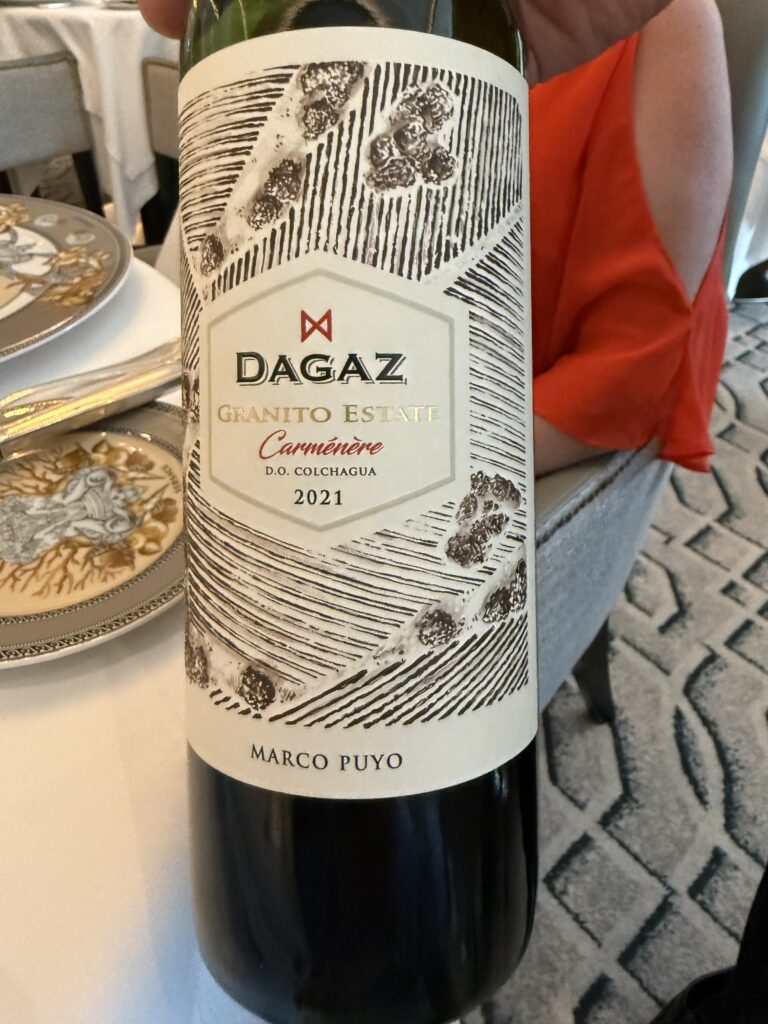
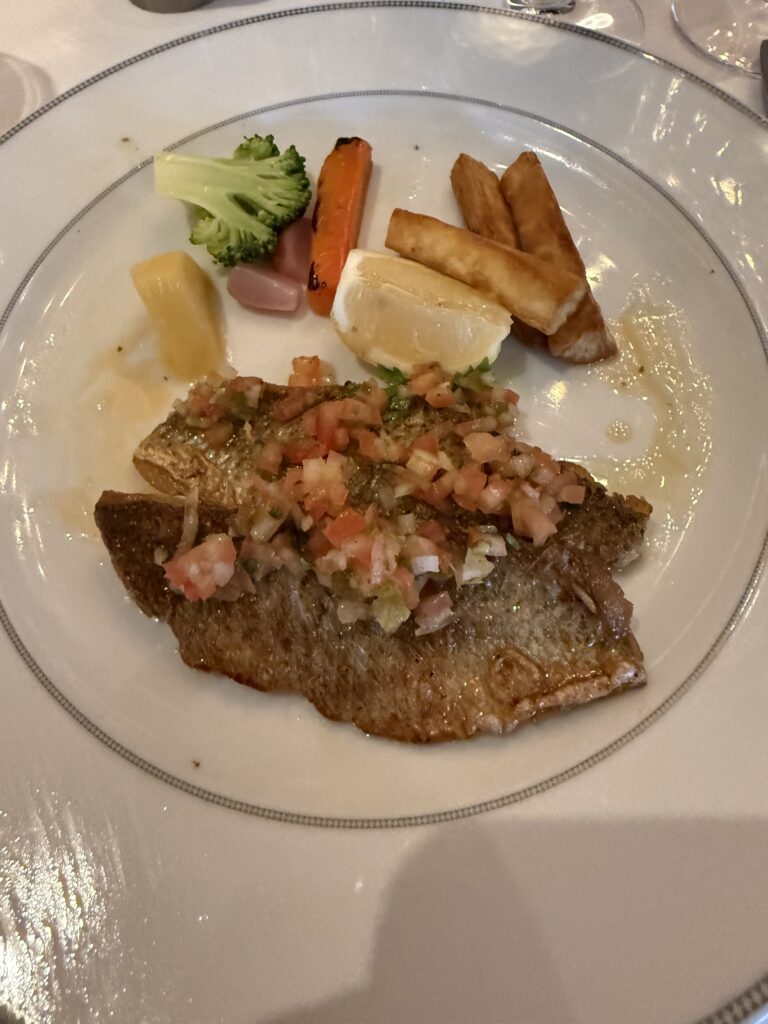
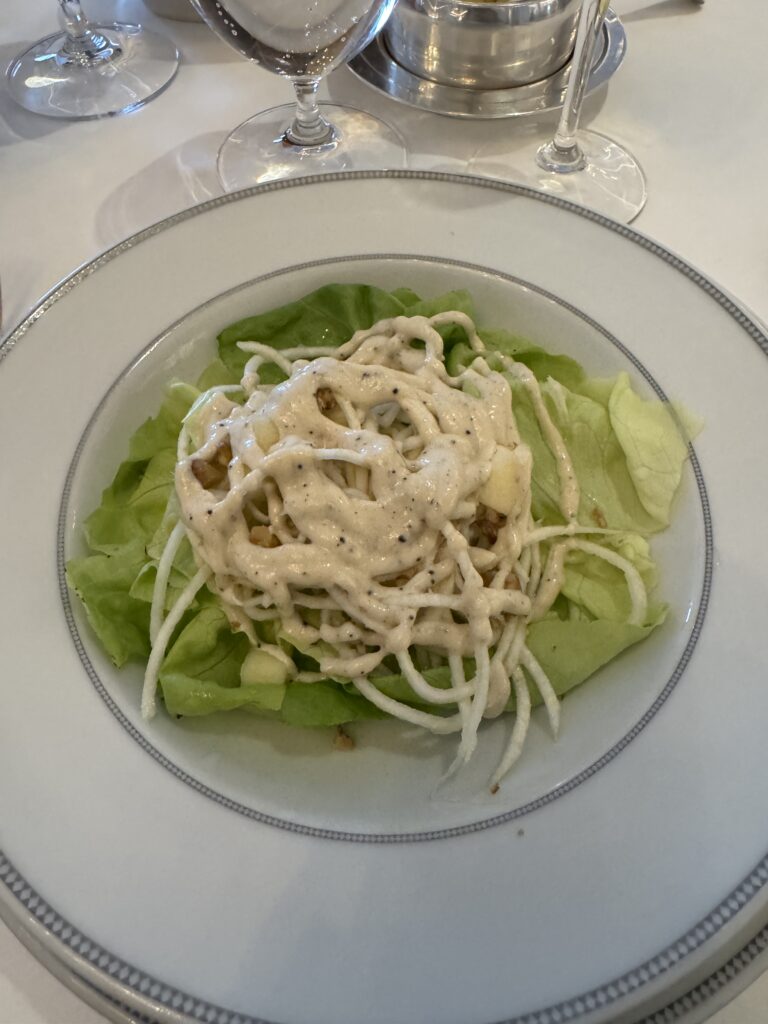
Later in the afternoon, we enjoyed drinks and canapés at 5 pm, followed by dinner at Compass Rose at 7:30 pm—always a highlight. After dinner, we had a nightcap in the theater where our cruise director, David Nevin, put on a show singing a variety of songs. We all were ready to call it a night as we will be in the Falkland Islands tomorrow and we have a 9 am excursion in Stanley.
Another great day at sea, filled with learning, good food, and appreciation for just how much goes into making this incredible ship run so smoothly. 🚢✨
More About the Drake Passage
The Drake Passage connects the Atlantic and Pacific Oceans, stretching roughly 1,000 kilometers between Cape Horn at the southern tip of South America and the South Shetland Islands of Antarctica. With an average depth of about 3,400 meters, it’s home to the Antarctic Circumpolar Current, the most powerful ocean current on Earth, carrying an estimated 95 to 150 million cubic meters of water per second.
Known for its fierce westerly winds and strong currents—especially near Cape Horn—the Drake Passage can generate waves exceeding 12 meters, earning its reputation as one of the world’s most challenging sea crossings. Despite the harsh conditions, it’s also rich in marine life, serving as a habitat for whales, dolphins, and countless seabirds.